
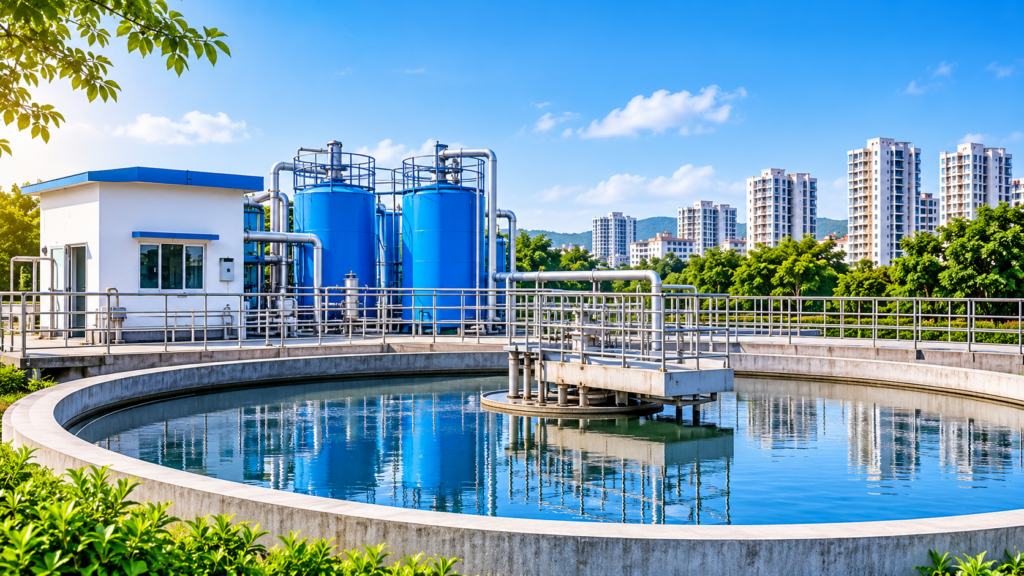
Pune’s rapid growth is putting real pressure on its water resources. Every housing society, office tower, hospital, hotel and factory produces wastewater that needs responsible handling, so wastewater management solutions are now part of planning any building or facility. If you are comparing STP plant manufacturers in Pune, this guide explains how sewage treatment works, which technologies exist, what affects cost and how to shortlist the right partner.
What Is a Sewage Treatment Plant (STP)?
A sewage treatment plant removes organic matter, suspended solids and harmful microorganisms from domestic sewage and wastewater. Most plants combine screening, biological treatment, separation of solids and disinfection.
Treating wastewater before disposal protects groundwater and local water bodies. Treated water may also be reused for gardening, toilet flushing and other suitable non-potable applications, subject to applicable standards.
Why Do Industries, Builders and Housing Societies Need STP Plants?
Housing societies: Residential complexes generate sewage every day. A residential sewage treatment plant lets a society manage it on site and reuse treated water in common areas.
Commercial buildings: Offices, hotels and hospitals have high and variable loads, so an STP plant for commercial buildings must be sized carefully.
Industrial facilities: Factories need systems for sanitary and canteen sewage, plus separate effluent treatment where process wastewater is generated.
Beyond water conservation and environmental protection, treatment helps projects meet applicable regulations. Requirements differ by project type and size, so confirm them with the local authority and pollution control board before finalising a design.
Types of Sewage Treatment Plants
No single technology suits every site. Common options include:
- MBBR (Moving Bed Biofilm Reactor): Uses media that carry biofilm; often chosen where space is limited.
- SBR (Sequencing Batch Reactor): Treats sewage in timed batch cycles within a single tank.
- MBR (Membrane Bioreactor): Combines biological treatment with membrane filtration, producing water suited to reuse.
- Conventional systems: Aeration and settling-based processes, typically for larger sites.
- Compact (packaged) plants: Pre-fabricated, space-saving units for smaller sites.
The right choice depends on sewage characteristics, treatment capacity, available space, budget and discharge or reuse requirements.
How to Choose the Right STP Plant Manufacturer in Pune
When comparing sewage treatment plant manufacturers in Pune, look at:
- Experience in sewage and wastewater treatment projects
- Plant design and treatment capacity offered
- Technology selection and customisation to your site
- Installation and commissioning support
- Operation and maintenance services
- After-sales technical support
- Compliance with applicable environmental standards
- Total installation and operating costs, not just the purchase price
Factors Affecting STP Plant Cost in Pune
STP plant cost in Pune varies from project to project. The main factors are:
- Daily treatment capacity (KLD)
- Selected treatment technology
- Civil construction and installation requirements
- Automation and control systems
- Operation and maintenance needs
- Incoming water quality and reuse objectives
Because of these variables, dependable figures come only from a site-specific quotation. Be cautious of any price quoted without a clear understanding of your requirements.
Why Consider Polaris Water?
Polaris Water is a Pune-based water and wastewater treatment company located in Nigdi. Its website lists sewage treatment plants (STP), effluent treatment plants (ETP) and zero liquid discharge (ZLD) systems among its offerings. For sewage, its solutions include packaged sewage treatment plants, aerobic and anaerobic systems and membrane bioreactors, supported by UV disinfection and odour control systems.
The company describes turnkey support from design and manufacturing to installation and commissioning, and offers operation and maintenance, rehabilitation and modification, and remote monitoring services. It lists real estate among the sectors it serves.
If you are planning a project, share your capacity, site and reuse requirements with the Polaris Water team to discuss suitable options.
Conclusion
Selecting a sewage treatment plant is a long-term decision. Evaluate technology, capacity, operating costs and service support together rather than comparing price alone. Industries, builders and housing societies planning a project can contact Polaris Water for an enquiry or consultation.
FAQ
It depends on sewage characteristics, treatment capacity, available space, budget and whether the water will be discharged or reused. A manufacturer should recommend a technology only after reviewing your site details.
There is no fixed price. Cost depends on capacity (KLD), technology, civil work, automation, operation and maintenance needs, and reuse objectives. A site-specific quotation is the reliable way to get a figure.
Yes, for suitable non-potable uses such as gardening and toilet flushing, subject to applicable standards and the quality your system achieves.
Requirements depend on the project’s size, type and local rules. Check with the relevant local authority or pollution control board.
Look for commissioning support, operation and maintenance services and responsive technical assistance, so the plant keeps performing over the long term.